 By Julie DeLong, A-1 Freeman Moving Group
Any time packing and moving your home to a different place in or around Denver, several pieces might not survive the move. This is what's known as a moving casualty, an unfortunate degree of damage or full breakage that can take place on move-out day, move-in day, or while the moving truck moves along from one house to the subsequent. Irrespective of how meticulously you pack, nearly all households encounter some form of modest moving casualty throughout the transfer, nevertheless you don't need to.
Being a professional moving company in Denver, we pack plenty of vulnerable belongings for our clients in order to be sure they reach the destination unscathed. And so, today, we are here to share ways to avoid the most common moving casualties when you are packing yourself and approaches to protect your most challenging-to-move things.
Delicate Glassware, Fine China, & Collectibles
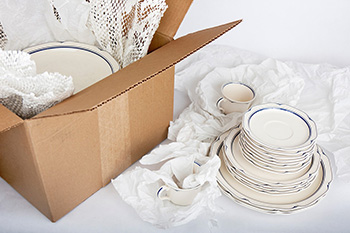
There exists a justification that professional movers have so many specialty packing materials for moving your dishes. Glassware and ceramic plates are difficult enough to safely move without damaging them, much less fine china in addition to sensitive collectors items. Many families notice a minimum of one crack or destroyed glass item in a move with dozens of fragile goods in boxes.
You will want to take special care packing, filling, separating, and cushioning your most sensitive items.
- Make use of cardboard dishware partitions
- Pack plates vertically, this approach minimizes the chance of breaking
- Stuff each and every hollow area using paper, bubble wrap, or packing peanuts
- Don't permit glass to touch other glass
- Do not pack too tightly, or pressure/bumps may cause shattering
- Fill extra room and also the outside of each and every box with fluffy packing material
Wall mirrors & Pictures
Substantial panes of glass are especially tricky to pack because they have a high chance of being cracked or shattered in the move. This suggests mirrors and glass-covered pictures need to be packed with additional care. The most important thing is to shield the glass area and reduce the possibility of an impact against the glass.
- Place framed artwork together in a box utilizing cardboard partitions between
- Attach a blanket or cloth over the total area of the glass
- Utilize a large section of cardboard over every glass area to lessen shocks
- Stow upright, like the plates
- Do not permit packed glass to lay flat
Wood Furniture
Wood household furniture is a frequent moving casualty, although not the complete furniture piece itself. Instead, wood tends to endure scrapes, scuffs, and problems with the finish when being disassembled or hauled by means of narrow corners and doorways of the home. It is rather common for once-pristine wood pieces of furniture to reach the new residence needing refinishing or fixes. Here is how to avoid damage to your furniture (and also wall surfaces) as you go along:
- Detach components such as handles and feet to make the pieces of furniture more rectangular and even.
- Stow all removed parts together in a visibly marked bag or box.
- Small sets of taken off hardware may be placed in a drawer of the pieces of furniture it came from
- Store numerous sets of removed pieces in the same container for convenient reconstruction
- Tape All drawers and cabinets shut
- Use paper tape or masking tape which won't harm paint, stain, or finish
- Take big household furniture apart when you can.
- Wrap every piece separately and bunch into a single carton or bundle.
- Plainly label anything you take apart, incorporating where the pieces should be reconnected down the road. Colored tape may help.
- Wrap all things in furniture pads or blankets to minimize the possibility of scuffs
- Ask for assistance or hire professional movers to move substantial or cumbersome household furniture
Musical Instruments
For those who own any musical instruments, you know that relocating could mean legitimate danger for these types of carefully tuned and sensitive objects. From grand pianos to clarinets and all things in between, instruments are typically breakable and need to be handled with the utmost concern.
For large musical instruments such as pianos, harps, and acoustic bass, you may need to utilize a specialized instrument moving team. Talk to your moving company in Denver about what they are able to manage or services they could connect you with who are experts in moving large musical instruments correctly across short or long distances.
Pertaining to small sized individual musical instruments, these procedures may help you keep your musical equipment safe and in excellent condition throughout the move:
- Loosen the strings of all stringed instruments for instance guitars, violins, cellos, and small harps. The humidity and temperature variations over a move or while in storage may cause strings to break or possibly warp the wood of the instrument in the event the strings are extremely taut.
- Pack mouthpieces separately and think about hauling your mouthpieces together with you rather than packaging them in a box.
- Put instruments in their own designed and also cushioned cases if possible.
- If realistic, cover instruments in bubble wrap, even within their cases, to provide added padding and also protection.
- If perhaps you do not have a case wrap the instrument in a number of layers of bubble wrap and then package in its own box with nothing else inside.
- Pad the box with newsprint, bubble wrap, or packing peanuts to prevent moving and bumping.
- Do not ever package two musical instruments in the same carton just in case they damage one another on the move.
- In the event that it's a possibility, think about moving instruments in your car or truck as opposed to on the moving truck.
Artwork
 No matter whether you have posters, painted canvas, or sculptures, preparing fine art may be tough. There's a pretty good chance your fine art will certainly endure the move devoid of customized moving services, but only if you prepare it the proper way and are cautious concerning the place it's placed in the moving truck. For extremely high-priced pieces, speak with your moving company in Denver concerning if you should evaluate moving them in your car or transporting with an artwork transport service.
Even so, if you have simply got a handful of delicate pieces of artwork to pack and take with you, here is how to prevent them from turning out to be moving casualties:
Canvas & Posters
- Decide if it is safe to roll up your artwork and stow in poster tubes. Upright, strong poster tubes will often be the most secure way to go.
- When stowing flat, think about keeping inside picture frames that are presently packed up properly to reduce bumps.
- If storing flat, make use of a thin flat carton near the measurements of your art
- Put the canvas or poster in between pieces of cardboard to keep them each flat and secure
- Think about plastic wrap, wax paper or maybe a quick spray of paint-sealant for unsealed paintings or sketches
Fragile or Oddly Sized Statues
- Like dishes, fill every crevice, cavity, and handle with fluffy packing material
- Like instruments, spot in a cargo box of packaging material and encompass with more packing material to protect from bumps or compression
- Metal as well as wood can be located in the same box
- Generally, never load up two glass or delicate sculptures within the same container
Exercise Equipment
Finally, we come to the toughest but perhaps most difficult packing task of all: your exercise equipment. Weights, weight benches, exercise bikes, and specialized workout machines are frequently a massive obstacle to move. The weighted and structural parts can be extremely heavy while the gear by itself might be challenging and/or cumbersome to move. In fact, significant work out equipment is often the cause of moving casualties.
Sporting gear, alternatively, can be quite vulnerable. Rackets and skis, snowboards in addition to surfboards, as well as other finely wrought sporting equipment may take serious destruction from the wrong sort of jostling throughout a move. These are typically items you ought not simply toss in a container and head out.
Here is how to move your home gym and sporting gear correctly with no breaks, losses, or too-heavy cartons:
Weights
- Put a couple per carton
- Cushion snugly and pack into small now-heavy cartons
- Search for or construct boxes smaller than a book carton
- Load up disc weights in manageable stacks
- Wrap in furniture pads and secure utilizing shrink wrap
- Don't load up a group of weights heavier than you can carry
- Lift up utilizing your legs
Training Equipment
- Preserve and load up the set up instructions
- Take down everything you will be able to and load up in bundles of bars and bench portions
- Label every component and also screw once you take down and store in tagged bags along with the workout gear parts
- Take pics before you take apart to aid with reassembly
Sporting Equipment (Rackets, Surfboard, etc.)
- Keep rackets inside their cases with an extra layer of cushioning. Never allow to flex.
- Bubble-wrap skis and snowboards and then put in cases or upright boxes.
- Think about extra cardboard or struts to maintain boxes impact-resistant and firm
- A professional mover can provide cartons, if you require them
- Pack groups of gear together inside the same box.
----
Moving to a new house in Denver doesn't have to include the common moving casualties including furniture scrapes or cracked plates. No matter if you are relocating big everyday belongings or exclusive vulnerable possessions, these pointers will allow you to have a tragedy-free move with each and every one of your treasured items making it safe-and-sound to your new house. If you want further smart moving tips from a professional moving company who's seen it all or you are concerned about moving specific items in your house, contact us today!
Request a free quote